

Rancher Hat vs Fedora: Key Differences in Brim, Crown and Style
Posted by Editorial Team on
Quick Summary
A rancher hat is a Western-style hat with a wide, stiff brim and a tall crown, while a fedora is a more formal felt hat with a narrower brim. Brim width, crown height and trim are the main differences to check. Many shops call rancher-style fedoras "rancher hats," so compare specifications before you buy.
- Rancher hats usually have brims 3.25 to 4 inches wide, while fedoras usually measure 2 to 2.75 inches.
- A rancher's brim stays stiff and flat, whereas a fedora's brim can snap down, curl or turn up.
- Rancher crowns often stand 4.5 to 5.5 inches tall, compared with 4 to 4.75 inches on fedoras.
- Measure the finished brim rather than the spec sheet, because a snapped brim can shrink in width.
- Choose a rancher for outdoor and Western outfits, and a fedora for work or smart-casual dress codes.
Table of Contents
- Rancher Hat vs Fedora: Core Definitions
- Side-by-Side Comparison: Brim, Crown and Brim Position
- Materials and Durability: Wool Felt, Straw and Care
- Western Styling vs Classic Style: How Each Looks on the Body
- Choosing by Face Shape, Head Size and Occasion
- Styling Both Hats: Outfit Pairings and Dress Codes
- Which Hat to Buy: Next Steps for Your Wardrobe
- Frequently Asked Questions
Rancher Hat vs Fedora: Core Definitions
Last Updated: November 19, 2026
Scarves & Fedoras has put together this guide to help you tell a rancher hat from a fedora, and to decide which one suits your face, head size and wardrobe. The two hats look alike at a glance, yet the brim, the crown and the trim each shift the overall shape. A rancher hat is a wide-brimmed Western design, while a fedora is a more formal felt hat with a narrower brim. That split drives almost every choice that follows.
What makes a rancher hat a rancher hat
A rancher hat is a Western-style hat built around a wide, stiff brim and a tall crown. Its look comes from working-ranch heritage, which is why the brim often stays firm and the crown holds a defined shape. The rancher is the hat to reach for when you want a bold, outdoors-inspired silhouette.
Our rancher styles pair a stiff brim with a decorative band and, in some cases, feather trim. These details add the Western character that separates the rancher from a plain dress hat.
Why a rancher-style fedora is not a true rancher
A rancher-style fedora borrows the rancher's wide brim but keeps the fedora's lighter, more refined construction. Many people call both "rancher hats," which makes shopping confusing. The practical difference shows up in the brim width, the crown height and the finish, so check those specs before you buy.
Side-by-Side Comparison: Brim, Crown and Brim Position
The brim and crown do most of the work in telling these hats apart, but broad labels like "wide" and "narrow" are where most shoppers get stuck. The table below gives general working ranges for these two hat types, so you can compare product specifications against real numbers.
| Feature | Rancher Hat | Fedora |
|---|---|---|
| Brim width | Wide, usually 3.25 to 4 inches | Narrower, usually 2 to 2.75 inches |
| Brim shape | Stiff, held flat or with a slight dip | Can snap down in front, curl, or turn up at the sides |
| Crown height | Tall, often 4.5 to 5.5 inches at the front crease | Lower, often 4 to 4.75 inches |
| Crown crease | Center crease with side dents, or a cattleman-style crease | Teardrop, center dent, or diamond crease |
| Trim | Decorative band, feather accents, sometimes a buckle | Grosgrain or fabric band, usually narrower |
| Overall look | Western, outdoors | Classic, formal |
Brim position matters as much as brim width. A flat brim gives a clean, structured line and reads as more Western. A snapped-down front brim shades the eyes and is the classic fedora move. A curled or turned-up brim softens the look and pushes the hat toward dressier territory. Our Western hat style guide describes how these shapes evolved, which helps explain why a rancher stays rigid and a fedora flexes.
Here is the terminology trap that trips up most buyers: "rancher" describes a brim-and-crown style, while "fedora" describes a hat form. That means a rancher-style fedora is a fedora built with rancher proportions, a wider brim and a taller, stiffer crown, rather than a true Western rancher. When you shop, check the brim width and crown height first, then the crease. A hat with a 3.5-inch brim and a 5-inch cattleman crease is a rancher in everything but the label. A hat with a 2.5-inch snapped brim and a teardrop crease is a fedora, even if the listing calls it a rancher.
Our wool felt rancher, THE RANCHER, uses a stiff brim with a decorative band and feather trim. If you want a rancher-style look, the MORGAN has a rigid crown and grosgrain edging. Set the two side by side and the difference in brim width is easy to see. For a narrower profile, the SILVERSTONE has a 2.5-inch brim.
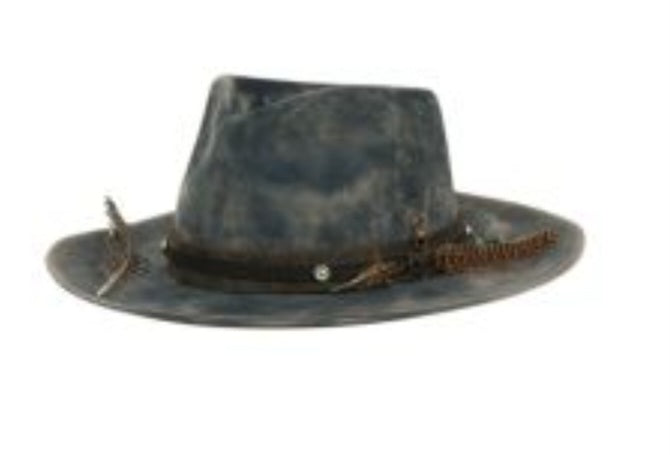
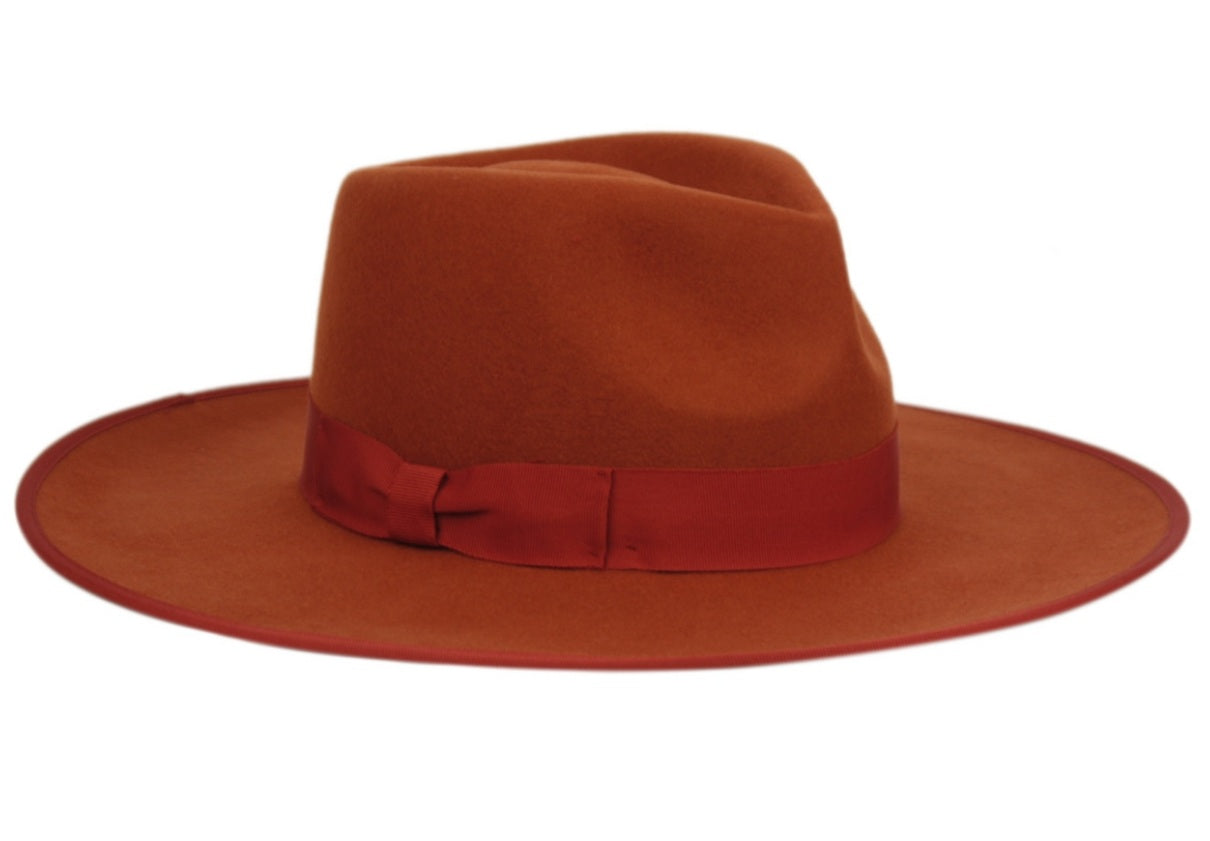
Watch out: brim width is often listed as the raw blank width before the brim is curled or snapped, so a 3-inch brim on a snapped fedora can wear closer to 2.5 inches once shaped. Measure the finished brim, not the spec sheet, if the fit matters.
Materials and Durability: Wool Felt, Straw and Care
Our hats in this guide are made from 100% Australian wool felt. Wool felt suits both rancher and fedora styles, and it keeps the crown firm over time. But felt and straw behave very differently in weather, and the care routine that keeps one hat looking new can ruin the other. Here is the material-by-material breakdown most comparisons skip.
Wool felt. Wool felt is the more durable everyday choice. It holds a crease, resists light rain, and can be reblocked by a hat maker if the brim warps. It is warmer than straw, which makes it the better pick for fall and winter. The trade-off is weight and breathability: a wool felt rancher with a 3.5-inch brim is a substantial hat, and it can feel hot in summer. Look after wool felt by brushing it gently with a soft brush in one direction, storing it on a hat stand rather than crushing it in a drawer, and letting it dry naturally if it gets damp. How to Maintain a Wool Fedora Hat: 2026 Care Guide covers cleaning and shape recovery in more detail.
Straw. Straw is lighter and more breathable, which makes it the better warm-weather choice. It is also less forgiving. Straw can crack if it dries too fast, and it loses shape if it gets soaked. Brush straw with a soft brush, wipe it with a barely damp cloth, and store it away from direct heat. Do not submerge a straw hat or dry it on a radiator.
Weather resistance by material. Neither wool felt nor straw is waterproof. Wool felt sheds a light drizzle and recovers, but heavy rain can warp the brim and leave a water line. Straw handles dry heat well but softens and spots in rain. A common pattern is to keep a felt hat for cool, dry days and a straw hat for hot, dry days, and to carry a rain cover or leave the good hat home when the forecast turns. If you wear a hat daily in wet weather, a felt hat with a firm finish is the more practical of the two.
Durability over time. Wool felt generally outlasts straw because it can be cleaned, reblocked, and reshaped. Straw is more prone to cracking at the crease and to sun fading. A well-kept felt hat can serve you for many seasons; a straw hat is more of a seasonal purchase. Neither material likes being stored damp, and neither likes long exposure to direct heat, which can shrink a sweatband and warp a brim.
Watch out: storing a damp felt hat in a closed bag is the fastest way to grow mildew and set a permanent crease. Let it air-dry on a stand first, then store it.
Western Styling vs Classic Style: How Each Looks on the Body
A rancher reads as Western. The wide brim, the tall crown and the decorative band all point toward ranch and rodeo culture. Put one on with boots and denim and the look feels deliberate.
A classic fedora reads as urban and tailored. The narrower brim and creased crown suit a suit or a smart jacket. The fedora works in more settings, while the rancher makes a stronger statement.
Choosing by Face Shape, Head Size and Occasion
Proportion decides more than trend does. A wide brim balances a longer face and can look overwhelming on a small frame. A narrower fedora often suits a rounder face or a smaller head.
Head size matters as well. Our styles come in M, L and XL, and some use an adjustable drawstring. Check the sizing chart before you order, because a snug fit keeps the brim level.
For a deeper look at matching brim and crown to your features, read How to Choose a Fedora for Your Face Shape (2026 Guide). Think about where you will wear the hat, too. A rancher suits festivals, travel and outdoor days, while a fedora suits work and evening wear.
For a ready-to-buy rancher-style option in a size that suits your head, browse the MORGAN.
Styling Both Hats: Outfit Pairings and Dress Codes
Pair a rancher with denim, a flannel or a leather jacket for a relaxed Western look. A rancher can also work with a tailored outfit, but keep the rest of the look simple so the hat stays the focus.
A fedora fits smart-casual and business-casual dress codes. Wear it with a blazer and trousers, or with a knit and chinos for a weekend look. Keep the accessories restrained.
If you need a fedora for the office, How to Style a Fedora for Work: A Professional Guide explains which dress codes it suits and how to wear it without looking costume-like.
Which Hat to Buy: Next Steps for Your Wardrobe
Start by deciding where you will wear the hat most often. If the answer is outdoors, festivals or Western-leaning outfits, a rancher is the better buy. If it is work, smart-casual or evening, a fedora fits more naturally.
Then check the brim width and crown shape against your face and head size. Our CLAY fedora has a 3.5-inch stiff brim, while the SILVERSTONE has a 2.5-inch brim.
Frequently Asked Questions
What hat is mistaken for a fedora?
The hat most often confused with a fedora is the rancher hat, because both are made from wool felt and have a crease running down the crown. The difference lies in the brim and shape. A fedora typically has a brim of about 2 to 3 inches that is often angled or snapped, while a rancher hat has a wider, stiffer brim, usually around 3 to 4 inches, with a flatter or slightly curled edge. Rancher hats also tend to have a taller, more rounded crown with a pinched front. Checking these three features, brim width, brim position and crown shape, will tell you which style you are looking at.
What is the difference between a rancher hat and a fedora?
A rancher hat is a Western-style hat with a wide, stiff brim, a tall crown and often a decorative hatband or feather trim. A fedora is a classic dress hat with a narrower brim that is usually turned up at the sides and a crown with a center crease. Rancher hats lean toward workwear and outdoor Western looks, while fedoras suit urban, tailored and dressier outfits. A rancher-style fedora sits between the two, borrowing the wide brim while keeping the fedora crease and shape.
Is a rancher hat considered a fedora?
Not strictly. A true rancher hat is its own category rooted in Western ranch wear, while a fedora is a distinct dress hat style. Many modern hats blur the line, so brands sometimes label a wide-brim felt hat as a rancher fedora. If you want the Western silhouette, look for a stiff brim of roughly 3.5 inches and a pinched, rounded crown. If you want the classic dress hat look, look for a narrower brim and a crease in the crown.
How should a rancher hat fit compared with a fedora?
Both hats should sit level on the head with the brim parallel to the floor, but they fit differently because of their proportions. A rancher hat's wider brim means it can feel heavier and more forward-set, so the band should sit snugly just above the ears. Our Morgan and Clay styles offer an adjustable drawstring in the M/L size. Measure your head circumference with a soft tape, then match it to the size guide, with M at 57cm, L at 59cm and XL at 61cm for the Silverstone and Vintage Caramel styles.

Share this post
- 0 comment
- Tags: rancher fedora, rancher hat, rancher hat vs fedora, rancher hat vs fedora vs cowboy hat, western fedora hat