

7 Ways to Wear a Square Scarf for Effortless Style
Posted by Editorial Team on
Last Updated: November 14, 2026
Quick Summary
You can wear a square scarf seven ways: the classic triangle front, the neck knot, the cravat or ascot, a shoulder drape, plus hair, handbag and wrist accents. Nearly every style starts with the diagonal triangle fold, which takes about ten seconds. Match the fold to your scarf size, since a 27-inch square suits compact styles and a 35-inch square suits longer drapes.
- Lay the square flat and fold it corner to corner, then press the crease with your fingers.
- Tie the classic triangle front with the point centered and loose enough to slide two fingers underneath.
- Make a neck knot by folding a narrow band, wrapping once, and tying a single off-center front knot.
- Save cravat and ascot styles for a 35-inch square, as a 27-inch square looks undersized.
- Keep finished bands about 2 to 3 inches wide when wearing a small square scarf.
Table of Contents
- How to Tie a Square Scarf: The Foundation Fold
- 1. The Classic Triangle Front
- 2. The Neck Knot and Knotted Necklace
- 3. The Cravat and Ascot for a Polished Look
- How to Wear a Scarf Professionally
- How to Wear a Small Square Scarf
- Square Silk Scarf Styles Beyond the Neck
- Choosing Your Square Scarf Fabric and Size
- Frequently Asked Questions
How to Tie a Square Scarf: The Foundation Fold
The diagonal triangle fold is the starting point for nearly every square scarf style, and it takes about ten seconds. Lay the square flat, fold it corner to corner so the points meet, then press the crease with your fingers. You now have a triangle with a long edge and one point.
That single fold unlocks all seven looks below. A good fold is the difference between a scarf that stays put and one that slips all day. Below, we'll show you exactly how to tie a square scarf seven ways, with the size and fabric notes that make each one work.
The Diagonal Triangle Fold
Flat-fold first, then diagonal. That order matters more than most guides admit. A quick press along the crease keeps soft folds from collapsing mid-morning, and it gives the triangle a clean edge to work with.
Matching the Fold to Your Scarf Size
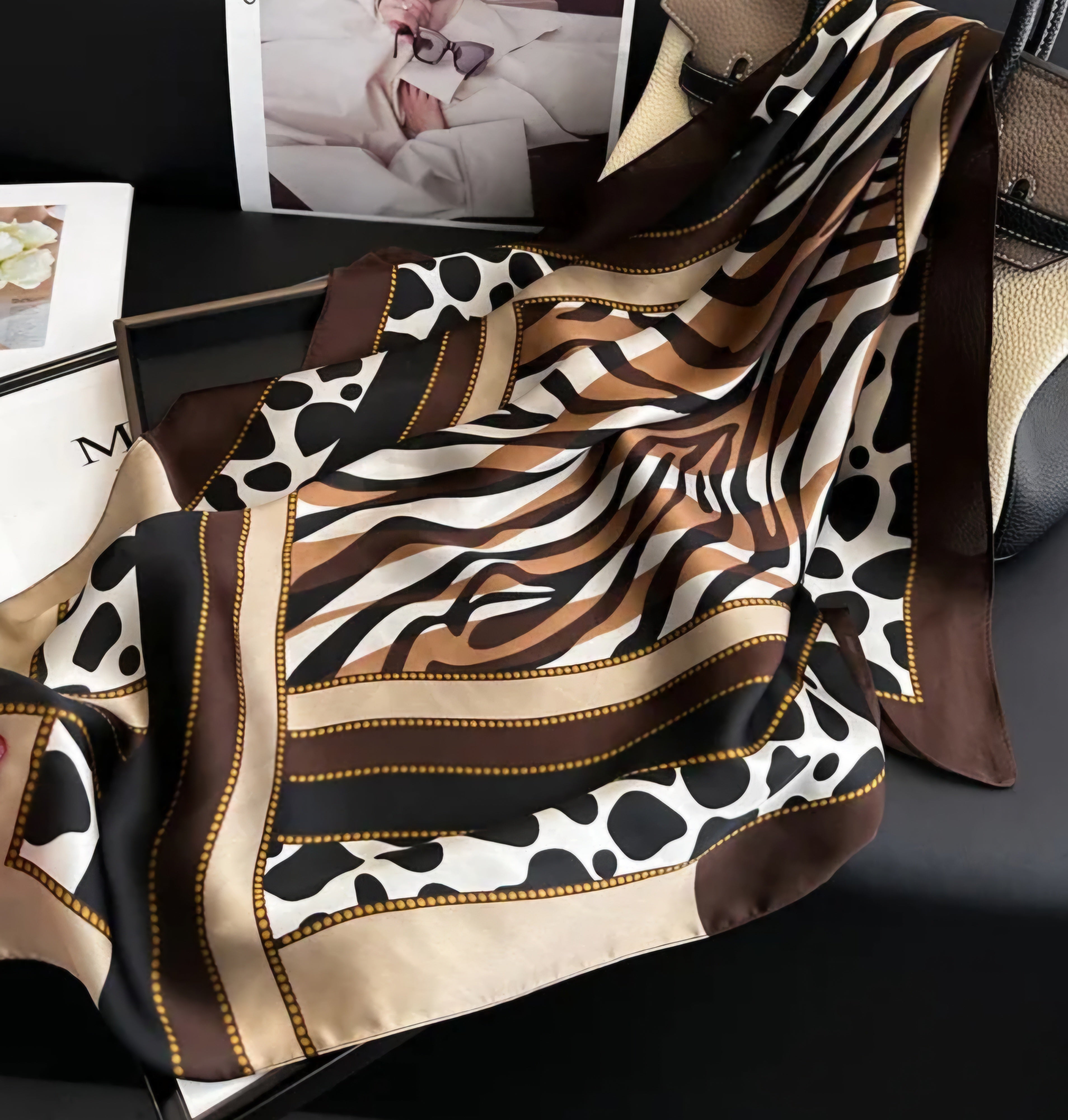
Fold size changes with the square. A 27-inch scarf gives a compact triangle that sits close to the collarbone. A 35-inch square produces a longer drape with more fabric to knot. The Leopard Print Square Scarf measures 27 by 27 inches, which suits the shorter, snugger styles.
1. The Classic Triangle Front
The classic triangle front is the most flattering square scarf style for most necklines: fold diagonally, drape the triangle point down the chest, and tie the two ends behind the neck. It reads elegant with a crew neck and softens a sharp blazer collar.
Keep the point centered and the tie loose enough to slide two fingers underneath. Pull it tight and the whole look turns stiff. For this style, a print with movement works best, which is why we suggest starting with a silky leopard square scarf in tan or brown; the pattern carries the look without extra jewelry.
2. The Neck Knot and Knotted Necklace
A neck knot turns a square scarf into a knotted necklace in under a minute. Fold the square into a narrow band, wrap it once around the neck, and tie a single front knot slightly off center. The knot should sit at the base of the throat, not under the chin.
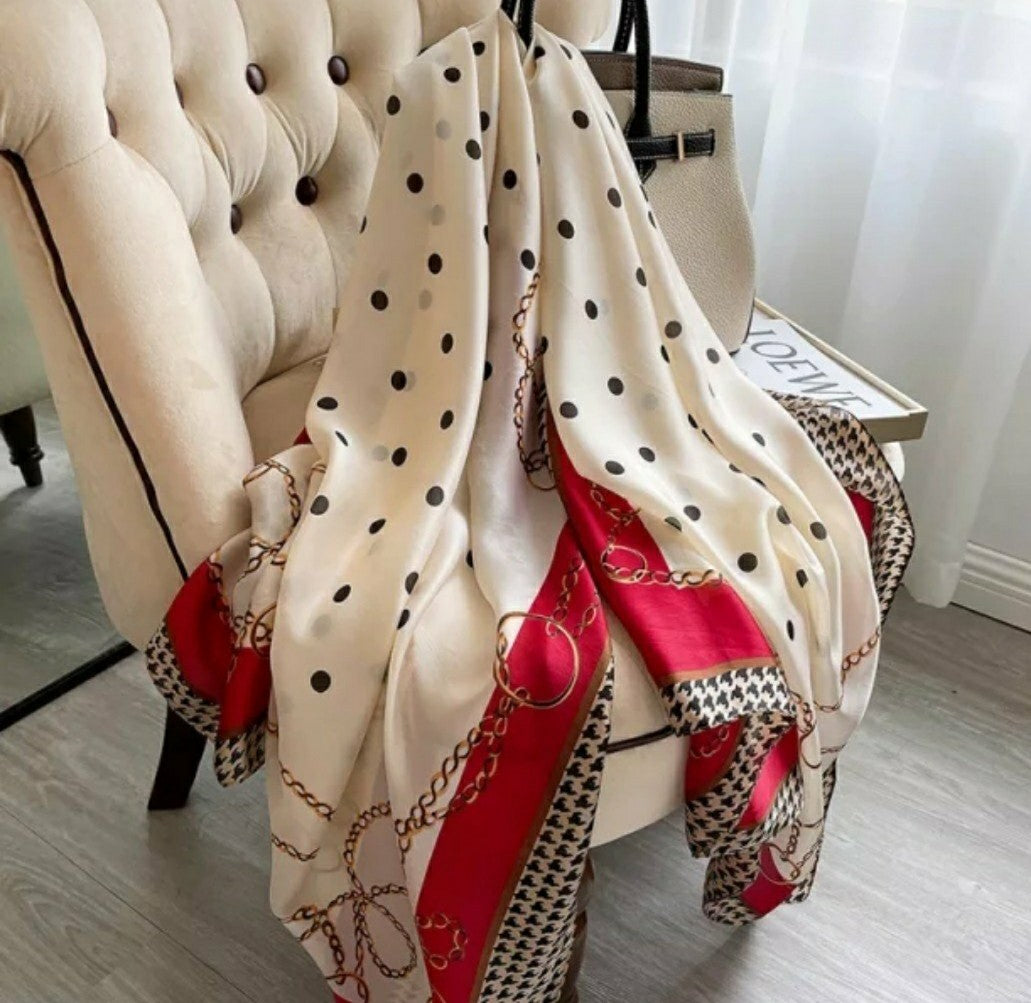
This style works well for busy days and stays in place through meetings. A lightweight square works best here because a heavy fold bulges at the knot. Try a polka dot silk scarf for a playful take, or keep it tonal for the office.
3. The Cravat and Ascot for a Polished Look
The cravat and ascot are the dressiest options on this list, and they suit a 35-inch square. Fold the scarf into a wide band, wrap it around the neck with one end longer, cross the long end over the short one, and bring it up through the loop. Tuck the ends into a blouse or jacket.
What most guides miss is tension. An ascot should look relaxed at the throat and structured at the chest. If the fabric is slippery silk, a second half-knot keeps it from sliding loose by lunch.
How to Wear a Scarf Professionally
Wearing a scarf professionally comes down to three choices: a muted palette, a compact knot, and a fabric that holds its shape. Keep the fold close to the neck and skip long trailing ends that catch on chairs or paperwork.
If you want one scarf that moves from desk to dinner, choose a mid-weight silk blend over a sheer square.
| Style | Best Scarf Size | Time to Tie | Best For |
|---|---|---|---|
| Triangle front | 27 in | 30 seconds | Casual and blazer looks |
| Neck knot | 27-35 in | 20 seconds | Everyday office wear |
| Cravat or ascot | 35 in | 1 minute | Formal and evening |
| Shoulder drape | 35 in | 15 seconds | Cool evenings, events |
Best Scarf Size
How to Wear a Small Square Scarf
A small square scarf, typically 27 inches on each side, is the most versatile size in a wardrobe because it forces compact folds. The trick is to keep the finished band narrow, aim for a band about 2 to 3 inches wide, so the knot stays proportional to the fabric you have. Fold the square into a triangle first, then roll from the long edge toward the point until you have a band; that order keeps the corners from bunching at the knot.
Three styles work best at this size. The neck knot: wrap the band once around the neck and tie a single knot slightly off center, leaving tails no longer than 4 inches. The wrist wrap: fold the square into a 2-inch band, wrap twice around the wrist, and secure with a half-bow so the ends sit flat. The headscarf: fold into a triangle, place the long edge at the hairline, and tie the ends at the nape, on a 27-inch square the tails will just reach, so tie a double knot rather than a bow to keep it secure.
Small squares also make excellent bag accents. Thread a folded band through a tote handle and tie a simple knot with short tails; a 27-inch square gives you enough length for one handle pass and a knot, but not enough for a large bow. The proportion rule is simple: the smaller the square, the smaller the knot. An oversized bow on a 27-inch scarf looks fussy because the fabric volume is not there to support it.
Watch out: a 27-inch square tied in a cravat or ascot will look undersized and the ends will not tuck cleanly into a collar, save those styles for a 35-inch square. If you have a long neck or prefer more coverage, a 27-inch square can feel skimpy in a triangle front; add a second fold or size up rather than pulling the knot tight.
Square Silk Scarf Styles Beyond the Neck
Square silk scarf styles extend well past the neckline, and this is where a single scarf earns its place in your wardrobe. The same square that knots at your throat can wrap your hair, trim a handbag, or sit at your waist as a belt accent.
Hair, Handbag, and Wrist Accents
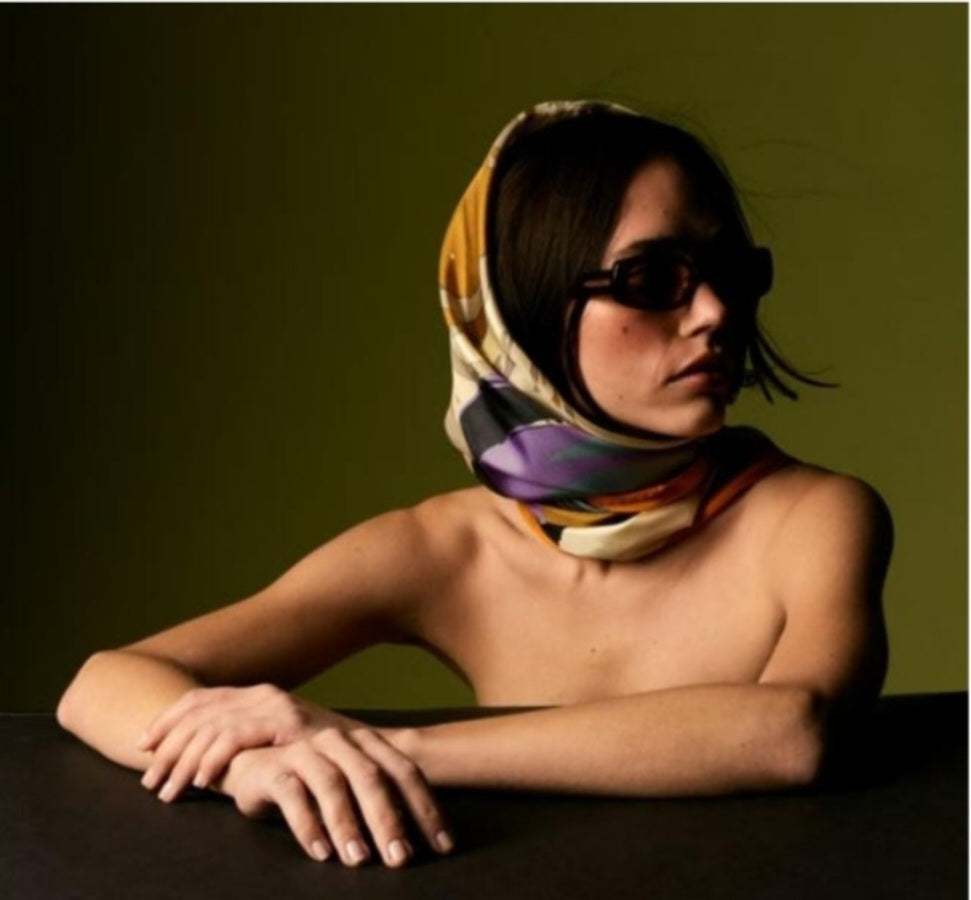
For hair, fold the square into a triangle, place the long edge at the hairline, and tie the ends at the nape or above the forehead for a headscarf look. Around a handbag, thread the folded band through a handle and tie a simple knot. At the wrist, wrap twice and secure with a half-bow. Each takes under a minute and gives an old outfit a fresh finish.
Choosing Your Square Scarf Fabric and Size
Fabric decides how a square scarf behaves, and the difference shows up in three places: drape, grip, and knot memory.
Size matters just as much, and the mapping is more specific than most guides admit.
A practical way to choose: pick the style first, then the size, then the fabric. If you want the classic triangle front for a blazer, a 27-inch silk square gives a compact, polished result. If you want a cravat for a dinner reservation, a 35-inch silk or silk-wool square holds the loop shape without slipping. If you want a shoulder drape for a cool evening, a 35- to 44-inch wool or cashmere square gives warmth and structure.
Watch out: a slippery silk square in a cravat will slide loose by mid-morning unless you add a second half-knot or choose a textured blend; the fix is fabric, not tighter tying, because over-tightening crushes the fold and damages delicate weaves over time.
If you want a concrete quality benchmark, look at a 100% Italian silk square scarf to see how a premium weave drapes. For a deeper comparison before you commit, read our guide on silk versus wool for daily wear, and if you're weighing what separates good from great, see what makes a scarf luxury quality.
Frequently Asked Questions
What are some creative ways to style a square scarf?
Beyond the classic neck tie, a square scarf works as a headscarf, a hair tie, a handbag accent, a wrist wrap, or a belt substitute. Try the triangle front for casual days, a cravat for office wear, or a knotted necklace for evening. Each method takes under two minutes once you have practiced the diagonal fold, so you can rotate styles through the week without repeating a look.
How do you fold a square scarf to wear around your neck?
Lay the square flat and fold it corner to corner into a triangle. For a slimmer band, fold the long edge toward the point two or three times. Drape the folded band around your neck so the ends fall evenly, then tie a single or double knot at your preferred height. A 27-inch square like the Leopard Print Square Scarf sits close to the collarbone, while a 35-inch silk square allows a longer drape.
How can you wear a small square scarf?
Small squares, roughly 21 to 27 inches, suit compact looks: a bandana-style triangle at the front, a knotted necklace, a wrist wrap, or a hair tie. Fold tightly to keep the shape crisp and choose a secure double knot so it holds all day. The Leopard Print Square Scarf at 27 by 27 inches is a good size for these closer-to-the-body styles.
How do you wear a scarf professionally?
Choose a square silk scarf in a restrained print, fold it into a narrow band, and tie a small cravat or single front knot that sits neatly inside a blazer collar. Keep the ends short and even. A 35-inch silk square such as the Barocco 100% Italian Silk Scarf can be styled as a cravat.

Share this post
- 0 comment
- Tags: 7 ways to wear a square scarf, how to tie a square scarf, how to wear a scarf professionally, how to wear a small square scarf, square scarf, square silk scarf styles